 An official website of the United States government
EGRP Cancer Epidemiology News
August 2026
- Genomic Summary Results for Cancer Epidemiology Research
- Highlighted Topics
- Prize Competitions
- Grants Policy Notices
- Requests for Information
- Research Resources
- NCI & NIH News
Genomic Summary Results for Cancer Epidemiology Research
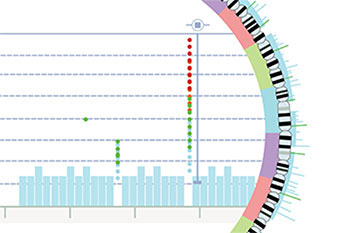
Genomic summary results (GSR) (also known as summary statistics or aggregate genomic data) serve as a valuable resource for researchers. GSR are summary genomic data generated from primary analyses across many individuals, providing a comprehensive overview of genetic variations in a given population. These summary statistics are valuable for helping to address many research questions without requiring individual-level data.
Summary results may include data calculated from genome-wide association studies (GWAS), such as genotype counts, allele frequencies, effect size estimates, and p-values. Because GSR do not contain individual genotype records, they are generally more easily shared under less restrictive mechanisms than individual-level genomic and phenotypic data. Further, instead of needing to obtain individual-level genomic datasets, which may contain millions of variants for hundreds of thousands of people, GSR offer the ability for researchers to analyze very large genomic studies using far lower computational power and storage.
The scientific value of GSR continues to expand as researchers come up with novel ways to utilize summary statistics data across different studies. For example, a recent paper in the Journal of the National Cancer Institute integrated GSR from multiple large cancer GWAS for 11 cancers to identify likely causal variants and generate testable hypotheses about mechanisms of inherited cancer susceptibility.
Recognizing the scientific value of making these resources more widely available, one of the goals of the Epidemiology and Genomics Research Program (EGRP) is to increase the accessibility of GSR for cancer research. EGRP developed a GSR webpage to provide guidance on sharing GSR and a list of databases and websites where cancer GSR data may be found and accessed. This resource also contains answers to some frequently asked questions about depositing and sharing GSR data.
Researchers interested in using or sharing GSR can visit EGRP’s GSR webpage to learn more about available resources and approaches for accessing and sharing genomic summary results.
Highlighted Topics
- Behavioral and Cognitive Signals of Aging in Real-World Contexts*
- Catalyzing Interdisciplinary Research on HIV-Associated Co-occurring Conditions
- Improving Diagnostic Safety and Quality in Healthcare*
- Intergenerational Interventions to Promote Health and Reduce Risk for Chronic Disease*
- Strengthening Biomedical Research, Promoting Trust, and Improving Health through Bioethics Research*
* A staff member from the Division of Cancer Control and Population Sciences is an NCI contact for the topic.
Prize Competitions
- NCI Office of Data Sharing Impact Prize (submission period ends October 5, 2026)
- Childhood, Adolescent, and Young Adult Cancer Data Innovation Challenge (Milestone 1 submissions are due November 13, 2026)
- Register now to attend a pre-submission webinar on this prize challenge on September 11, 1:30-2:30 PM ET
Grants Policy Notices
- NOT-OD-26-100, Implementation Update: NIH Data Management and Sharing Plan Requirements
- NOT-OD-26-101, United States Government Policy for Stopping High-Risk Life Sciences Research
- NOT-OD-26-094, NIH is Replacing Letters of Support with Letters of Collaboration to Reduce Administrative Burden
- NOT-OD-26-097, Recent Updates: Supporting a Safe and Respectful Workplace at Institutions that Receive NIH Funding
- NOT-OD-26-098, Notice of NIH Updates to Career Development (K) Award Programs
Requests for Information
- NOT-RM-26-004, NIH Common Fund is Soliciting Ideas for NIH-wide Challenges and Opportunities (responses due September 19, 2026)
- NOT-OD-26-095, Input on Potential NIH Funding Approaches to Support the Development of Future Clinical Trial Investigators (responses due September 30, 2026)
- NOT-OD-26-088, Proposed Changes to Reporting Outcomes from NIH Peer Review (responses due October 13, 2026)
- NOT-OD-26-112, Draft NIH Biosafety Policy for Research Involving Biohazards (responses due October 19, 2026)
- NOT-OD-26-113, Draft NIH Policy on Sharing Summary Level Study Results with Clinical Research Participants (responses due October 26, 2026)
Research Resources
NCI & NIH News
- Guidance on Applications for Studies with Animal Models
- Could Functional Precision Medicine Be the New Precision Oncology?
- Our Continued Commitment to Integrity and Fairness in Peer Review: Key NIH Reporting Channels to Know
- Simplifying the Landscape of NIH Career Development Awards, Including an Opportunity to Provide Feedback
Stay Connected
Subscribe for Updates

Subscribe
You can subscribe and unsubscribe at any time by entering your email address and selecting your preferences on the page that follows.
Need Help?

EGRP staff can answer questions on grant funding, policies, and research resources. If you do not know who to contact we will do our best to connect you with someone who can help you.
Email Us(240) 276-6730